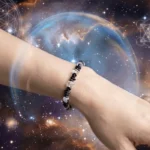


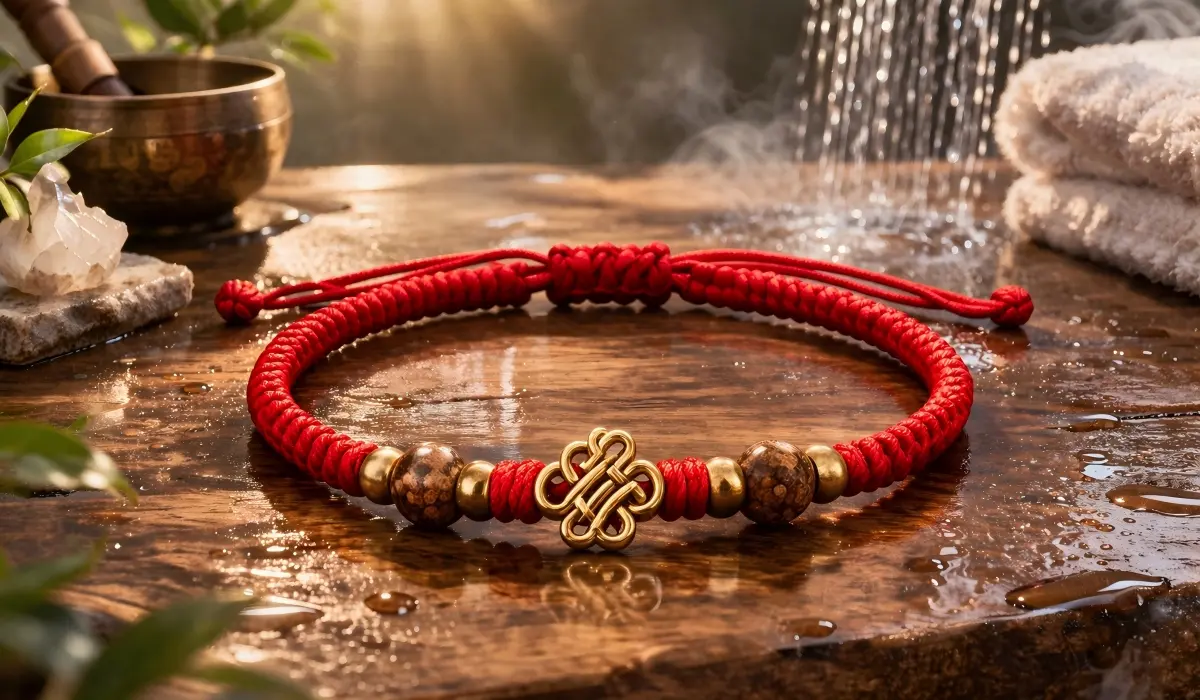
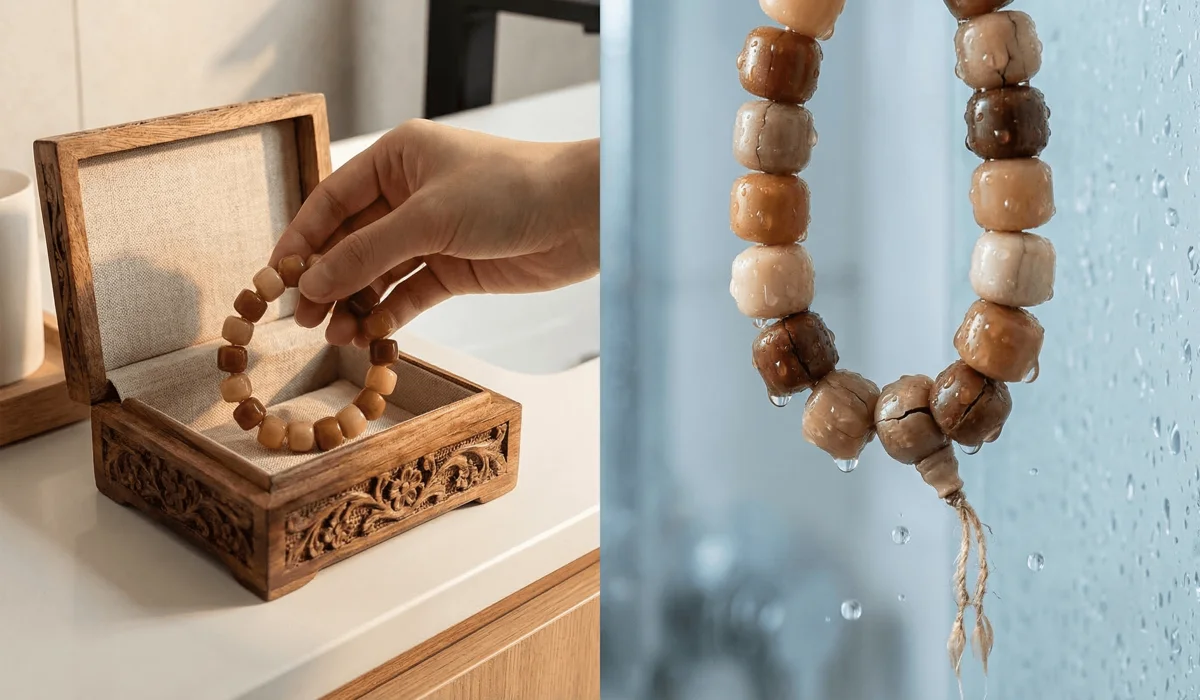
While some Tibetan cord bracelets are durable, it is generally not recommended to wear them in the shower. Water exposure can compromise material vulnerability, leading to the gradual degradation of elastic cord durability or cotton thread integrity. Beyond physical wear, many traditions emphasize spiritual purity, suggesting that sacred items should be kept away from the mundane hygiene rituals of the bathroom. To ensure your bracelet maintenance is effective, removing it before bathing prevents moisture and mold from accumulating within the fibers or beads.
- Material Risk: Water weakens natural fibers like cotton and silk over time.
- Spiritual Respect: Keeping sacred items out of bathrooms maintains their symbolic purity.
- Bead Protection: Organic materials like Bodhi seeds can crack if they get soaked.
- Color Longevity: Red dye in traditional cords may bleed or fade with soap exposure.
- Easy Care: Removing the bracelet daily is the best way to prevent mold and odor.
What Is a Tibetan Bracelet?
Definition
A Tibetan bracelet is a sacred accessory rooted in Himalayan traditions, often used as a tool for mindfulness and protection. Commonly referred to as “Vajra knots” (Vajra) or “Lucky rope,” these items are often blessed by practitioners to carry specific intentions. We have seen how these simple cords serve as powerful reminders of one’s spiritual path in daily life.
Origin & Materials
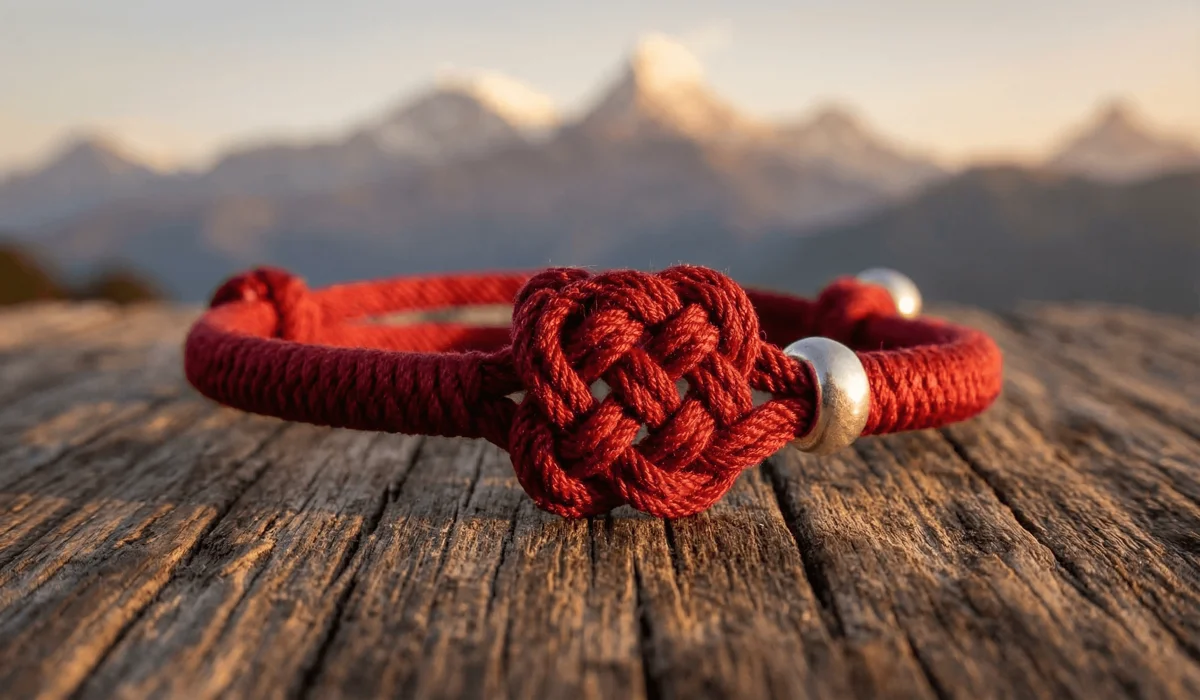
Natural wood beads and bodhi seed care are central to traditional beaded varieties found throughout the region. Hand-braided cords typically use high-quality cotton, silk, or nylon threads, each offering a different feel and lifespan. While some modern designs incorporate waterproof Buddhist jewelry elements like metal spacers, traditional styles remain largely organic and sensitive to the environment.
Basic Characteristics
These pieces often feature the “Endless Knot” (Srivatsa) or specific buddhist mantras woven directly into the thread design. They are characterized by vibrant colors, most notably the Tibetan red string bracelet, which symbolizes life force and protection. Our team often notices that the texture of the hand-braided cord is what makes each piece feel unique and personal.
Spiritual Meaning & Symbolism
The knots in these bracelets represent the interconnectedness of all things and the “Eternal Knot” of wisdom and compassion. This ancient symbol suggests that every action has a reaction and that everything in the universe is tied together. In the Reddit community r/TibetanBuddhism, user u/KudzuPlant explored the function of specific beads in these designs:
“I am curious what the function of the extra beads are… in a Tibetan style mala. Do these beads count as part of your mantra sadhana or do you skip over them?”
*sources:[Decoratice/extra beads on a mala – What is the meaning/function](https://reddit.com/r/TibetanBuddhism/comments/1rwogs9/decoraticeextra_beads_on_a_mala_what_is_the/)*
This discussion highlights how every element, from the thread to the spacer beads, carries a specific spiritual purpose for the wearer. Understanding these details helps practitioners treat their jewelry with the reverence for sacred items they deserve.
Chakra Associations
Red bracelets are often linked to the Root Chakra (Muladhara), promoting grounding and physical stability in a chaotic world. Multi-colored “Five Element” (Wu Xing) bracelets align with the full spectrum of energy centers to promote internal harmony. We suggest choosing colors that match the specific energy you feel you are currently lacking.
Cultural or Historical Context
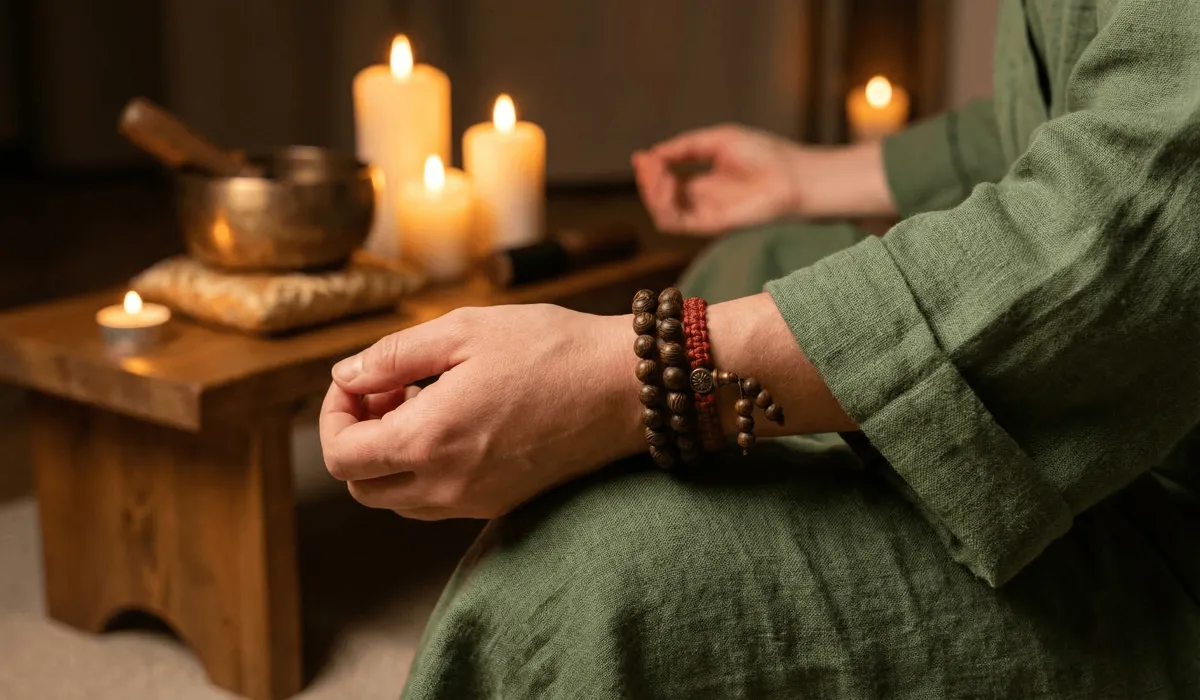
These bracelets have been worn for centuries by monks and laypeople alike as a reminder of the Buddha’s teachings. The practice of spiritual mindfulness is reinforced every time the wearer looks at the bracelet on their wrist during the day. It acts as a silent anchor, pulling the mind back to the present moment and away from stress.
Benefits & Intentions Associated with Tibetan Bracelets
Traditional beliefs suggest these bracelets aid in attracting good fortune and prosperity to the wearer’s life. They are often used to set a “boundary” against stress and chaotic external environments that might drain your energy. Based on our experience, many people find comfort in the physical presence of the cord during difficult times.
The bracelet serves as a physical anchor for cleansing rituals and daily meditation sessions. Wearing the bracelet is an experiential observation of one’s commitment to personal growth and compassion toward others. It is not just a fashion choice, but a statement of intent that guides your daily interactions. To learn about similar spiritual tools, you can check the Crystal Meanings guide for deeper insights.
How to Wear Your Tibetan Bracelet
Traditionally, these sacred items are worn on the left hand, which is considered the “receiving side” for energy in many Eastern philosophies. Wearing it on the right hand is often associated with “giving” or projecting the bracelet’s energy outward to the world. We recommend starting with the left wrist to invite protection and peace into your own personal space.
Many practitioners choose to wear their bracelet 24/7 to maintain a constant connection to their set intentions. However, for physical cleanliness and long-term durability, it is common to remove it during heavy manual labor or bathing. This practice ensures the materials do not degrade prematurely due to sweat or chemicals. For those curious about nighttime rules, you might read about Sleeping Rules to see how different traditions handle rest.
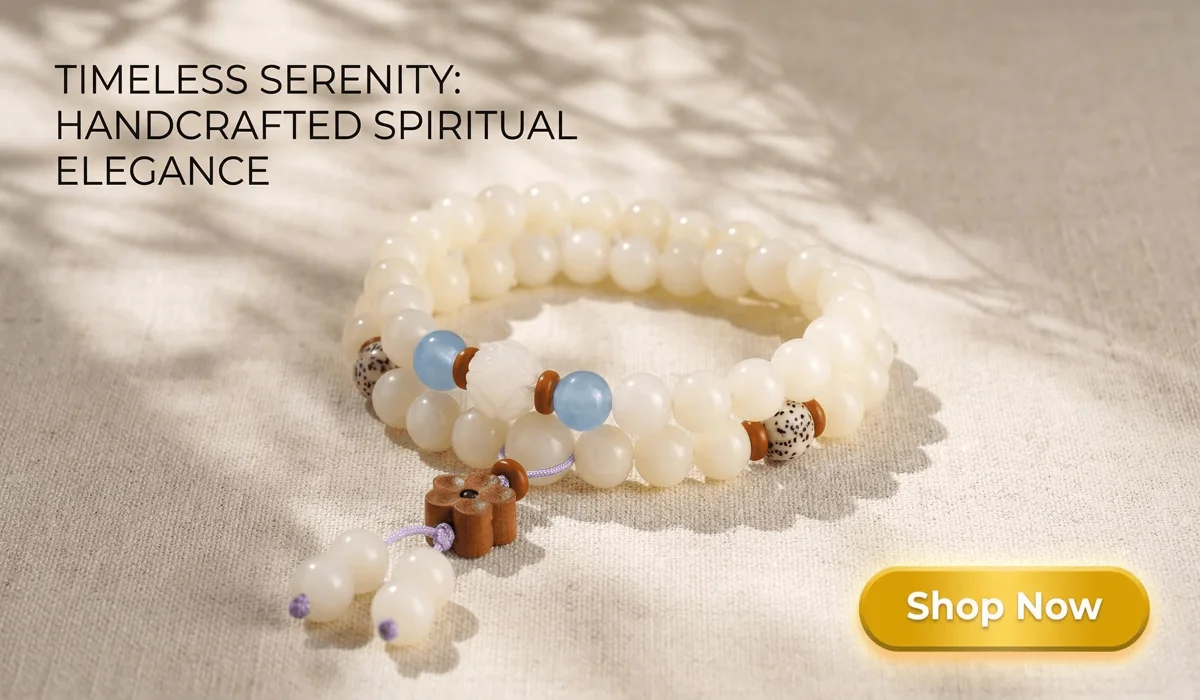
When first putting on the bracelet, many set a specific goal or prayer to “prepare” the item for use. This sets the stage for your journey and aligns the bracelet with your unique vibration. To explore authentic styles and find a piece that resonates with your practice, visit the Tibetan Bracelet collection at our studio.
Tibetan Bracelets vs Similar Spiritual Jewelry
Cord bracelets focus on the symbolism of the knots and thread, whereas crystal bracelets rely on the mineral’s vibration and chemical structure. The Gemological Institute of America provides extensive data on how different minerals react to their environment. Water safe tibetan crystal bracelets like clear quartz may handle moisture better than organic bodhi seed beads, which are highly porous.
| Feature | Tibetan Cord Bracelet | Crystal Chakra Bracelet |
|---|---|---|
| Primary Material | Cotton, Silk, or Nylon | Natural Gemstones |
| Water Sensitivity | High (Fibers can rot) | Varies (Based on Mohs scale) |
| Symbolic Focus | Knots and Weaving | Mineral Vibration |
| Main Use | Protection and Mindfulness | Energy Balance and Healing |
Full malas (108 beads) are primarily for counting mantras, while wrist bracelets are for daily protection and as a constant reminder of one’s path. Wrist versions often use more durable bead finish protection to withstand daily friction against clothing. Understanding these differences helps in selecting the right tool for your specific lifestyle needs.
Who Is a Tibetan Bracelet Suitable For?
These bracelets are ideal for those seeking to ground their energy or protect their “aura” from environmental stressors. They are suitable for anyone practicing spiritual mindfulness, regardless of their specific religious affiliation or background. We believe that the universal themes of compassion and wisdom found in these bracelets can benefit everyone.
They are especially great for travelers or those in high-stress jobs who need a physical reminder to remain calm and centered. On Reddit, user u/Necessary-Pie-4841 questioned the habit of wearing jewelry in the shower in the r/McKnightFamSnark community:
“So she claims she just did an everything shower.. my question is, does she not take off her jewelry? she has necklaces, rings, bracelets… still? does she sleep with all of that on too? strange”
*sources:[Everything shower](https://reddit.com/r/McKnightFamSnark/comments/1rvvgwi/everything_shower/)*
This curiosity mirrors the concerns many have about the impact of soap on beads and metal. For those who value their spiritual tools, taking a moment to remove them before cleaning the body is a sign of reverence for sacred items. It keeps the spiritual and the mundane separate and respected.
How to Cleanse, Charge, and Care for Your Bracelet?
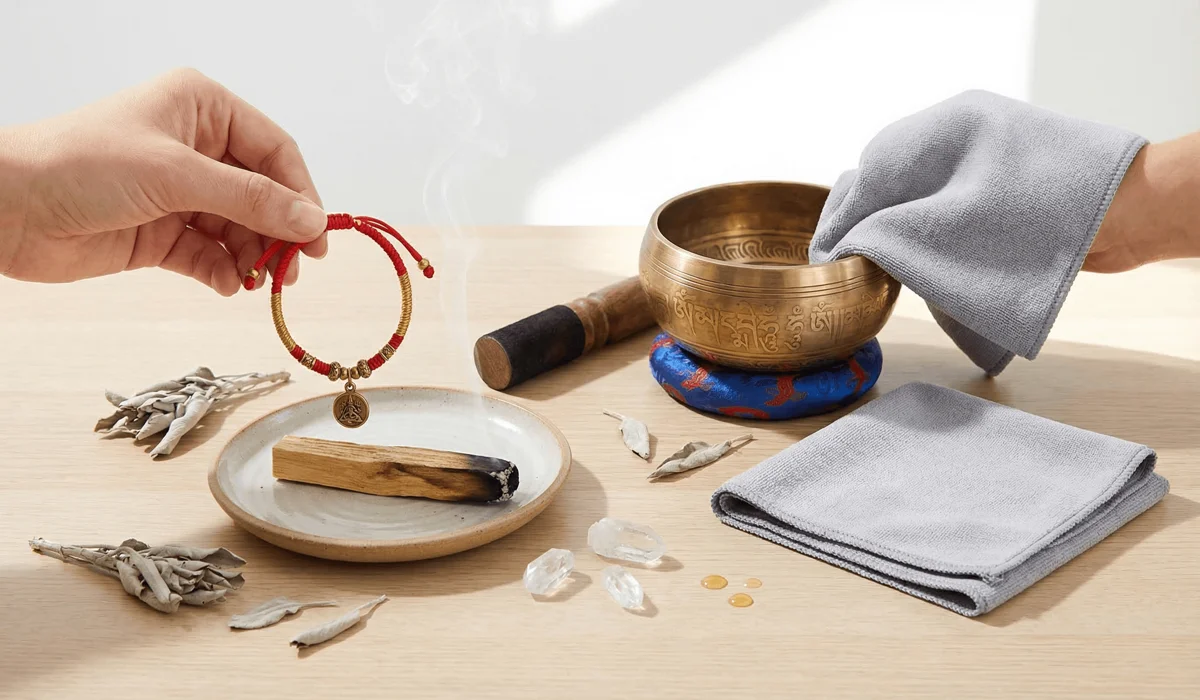
To keep your bracelet in top condition, use “smoke cleansing” with sage or palo santo to refresh the energy without using water. This method preserves the cotton thread integrity while clearing away any negative vibrations the item may have absorbed. Sound cleansing with a singing bowl is also highly effective for bead finish protection and is quite common in Himalayan traditions.
Place the bracelet in moonlight, especially during a full moon, to recharge its symbolic “potency” and energy. Set new intentions during the charging process to keep your practice focused and relevant to your current life situation. We often find that this monthly ritual helps wearers stay more connected to their spiritual goals.
Daily Care & Storage
- Avoid the impact of soap on beads, which can strip natural oils and cause organic materials like wood to crack.
- If the bracelet gets wet by accident, use proper drying techniques like patting it dry with a soft cloth immediately.
- Check the elastic cord durability or the strength of the braid regularly to prevent the bracelet from falling off unexpectedly.
- Store your bracelet in a clean, elevated place when not in use to show respect for its sacred nature.
On Reddit, user u/monxk3y shared a frustrating experience in r/PandoraCollectors about a tarnished bracelet:
“hi! this is a relatively new bracelet… does anyone know why it may have tarnished and stained so much? … i do not shower or sleep with this bracelet on”
*sources:[tarnished bracelet](https://reddit.com/r/PandoraCollectors/comments/1rst8po/tarnished_bracelet/)*
This shows that even with careful removal, environmental factors can still affect jewelry. For Tibetan items, moisture trapped in the threads is the biggest enemy. Using a soft microfiber cloth for a quick wipe down after wear can prevent many of these issues. For more general information on materials, you can visit Wikipedia for technical details on fibers and seeds.
Frequently Asked Questions
Q: Can I wear my Tibetan red string bracelet in the shower?
A: While nylon versions may survive, cotton and silk threads will weaken over time, and the color may bleed onto your skin or towels. It is best to remove it to ensure the longevity of the braid and the vibrancy of the red dye.
Q: Should I remove my bodhi seed bracelet before bathing?
A: Yes; bodhi seed care dictates avoiding submersion, as seeds can swell, crack, or even develop mold when moisture becomes trapped inside the porous material. Keeping them dry is the best way to preserve their natural beauty.
Q: Does water affect the spiritual energy of the bracelet?
A: Many practitioners believe that tap water contains stagnant or “processed” energy that can dull the spiritual purity of a blessed item. Using smoke or sound for cleansing is preferred over using common household water.
Q: Why shouldn’t I wear sacred mantras in the bathroom?
A: In Tibetan tradition, the bathroom is considered a place of waste and mundane activity. It is a sign of the proper way to handle sacred buddhist jewelry to keep items featuring mantras or symbols in clean, respectful spaces.
Q: How do I dry my Tibetan bracelet properly?
A: Gently squeeze the cord with a dry towel without wringing it and lay it flat in a well-ventilated area. Never use a hair dryer or high heat, as this can cause natural wood beads or seeds to become brittle and break.
Conclusion & Gentle Next Step
Protecting your Tibetan bracelet ensures its physical longevity and honors its deep spiritual significance. By being mindful of material vulnerability and avoiding the impact of soap on beads, you maintain both the beauty and the energy of your piece. We have seen that a well-cared-for bracelet can last for many years, becoming a true companion on your journey. Remember that bracelet maintenance is a form of respect for the traditions and artisans from which these items come. If you are looking for more information on professional gemstone standards, the Gemmological Association of Great Britain offers excellent resources. If you are ready to choose a new spiritual companion or replace a worn cord, we invite you to explore our handcrafted selection at Buddha Bodhis Studio.
The content provided is for informational and cultural exchange purposes only. It does not constitute medical, legal, financial, or other professional advice. Readers should consult with qualified professionals if they have specific concerns regarding their health or well-being.

Written by the Buddha Bodhis Team
Since 2020, we have been devoted to exploring traditional year-based wisdom, classical Feng Shui principles, and the rich spiritual symbolism rooted in Eastern cultural heritage. Our work bridges ancient metaphysical systems with modern life, interpreting annual cycles, elemental energies, and symbolic meanings to offer thoughtful insight and practical guidance. Through continuous research and practice, we aim to preserve traditional knowledge while making it accessible, relevant, and meaningful for contemporary seekers of balance, intention, and personal growth.
TikTok | YouTube | Pinterest | X
buddhabodhis@gmail.com